
 Musei Civici di Monza and the Casa degli Umiliati
Nessun risultato
La pagina richiesta non è stata trovata. Affina la tua ricerca, o utilizza la barra di navigazione qui sopra per trovare il post.



La web app è ottimizzata per essere navigato da dispositivi smartphone e tablet.


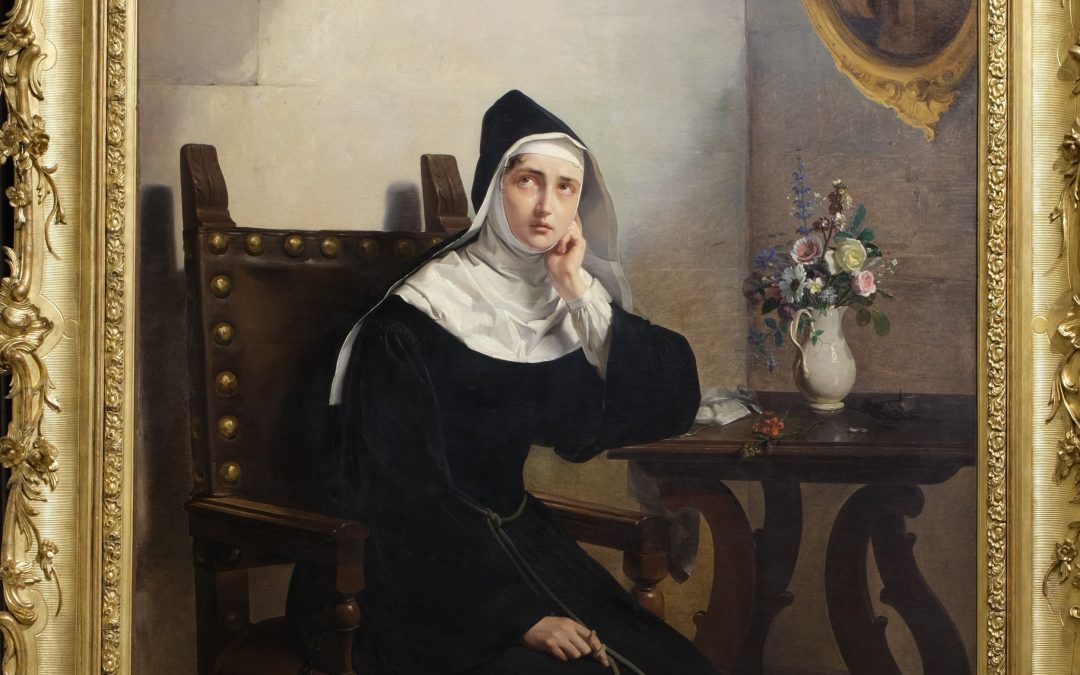
We continue into the next room, with its large “Annunciation” by Andrea Michieli, mannerist painter from Veneto. That concludes our journey into old paintings. From here, we take a dive into the 19th century, with the splendid painting of the “Nun of Monza” by Giuseppe Molteni, inspired by the pages of “The Betrothed”. It is a work with a genuine romantic flavour, with the young woman captured with an expression of pain, and tears running down her face.
Moving into the latter part of the 19th century, we meet the painters from Monza who gave rise to a very fruitful season for Lombard art in the period. Under Mosè Bianchi – Monza’s most important painter – the artists open a view onto the most important events in contemporary art, both at style level and in terms of content choice, in particular with inspiration from the new ideas arriving from France. It was Bianchi – represented here by the bronze portrait, created as a tribute to the painter, who died in 1904 – who shifted the attention from subjects with a romantic and literary feel to contemporary themes, where the protagonists are people captured during the simpler moments in daily life.
This line influences the production of Eugenio Spreafico, with a good deal of focus on the dimension of the work – in particular, feminine – and on a poetic view of Monza as it changes from rural village to an industrial city, renowned for its hat factories. We can admire his “Return from the spinning mill”, reminiscent of the famous “Fourth state”, shown in female terms but with a poetic, nostalgic tone, free from hints of social protests; on the wall opposite, “Pains. The Festival of the Dead” is displayed, a painting set near the old cemetery of San Gregorio, which no longer exists today. Spreafico is also responsible for the guardians of geese or turkeys moving across a background of the pre-Alps in the countryside around the city, paintings that can be seen on the panels to the right. Mosè Bianchi’s nephew, Emilio Borsa, is the painter of the charming view of a part of Monza that has since disappeared, with the large painting dedicated to the mill on the River Lambro, characterised by masterful use of light and colour.
As well as Borsa, Mosè had another artist nephew, Pompeo Mariani. Out of all the Monza artists, Pompeo was the most worldly and cosmopolitan, travelling to Egypt at the end of the 19th century in search of the exotic subjects that were quite fashionable at the time. The results of this journey are the many sketches and drawings that the artist used for finished paintings, such as the “View of the Nile near Cairo”.
Carlo Fossati, perhaps the least well-known of Monza’s painters in the period, was also a traveller. He left Italy for South America where he died very young. Before leaving, the painter completed the large piece entitled “Dragonflies”, that evokes a Piedmontese landscape and childhood games.
As you continue the visit, you will come to an area where you will see the “Desert” by Pompeo Mariani, a memory of his journey to Egypt, while on the wall over the stair, there is a large cartoon by Mosè Bianchi. This was created in preparation for the ceiling decoration in the Saletta Reale, the waiting room prepared at Monza’s railway station in the 1880s for the king and queen – Umberto I and Margherita of Savoy – who used the train to travel to Monza and their summer palace. Perhaps one of the last great fresco artists, Bianchi created a composition to celebrate the royal family, with symbols of the house of Savoy and a triumph of cherubs.
 Share your location
 View full screen
 Choose another point of interest
 Zoom in
 Zoom out


La pagina richiesta non è stata trovata. Affina la tua ricerca, o utilizza la barra di navigazione qui sopra per trovare il post.


La web app è ottimizzata per essere navigato da dispositivi smartphone e tablet.


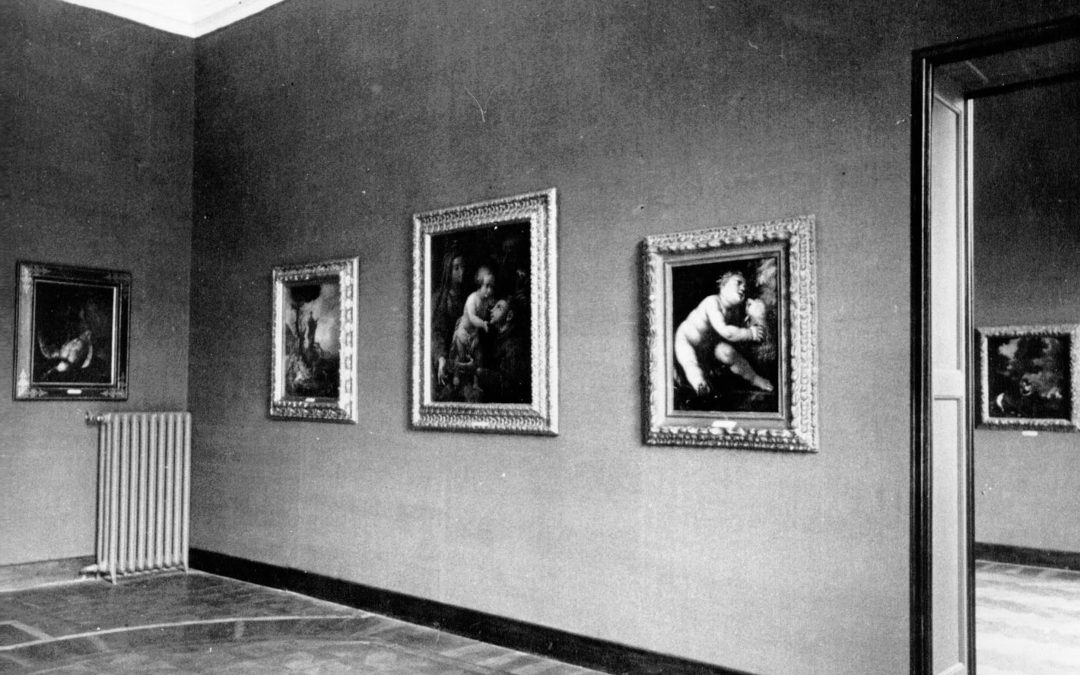
This exhibition route continues on the first floor, where you will be greeted by a large room containing a collection of paintings that date back from the 16th to the 18th centuries. The museum’s display criteria offers the opportunity to explore a broad range of subjects, from religious art to mythological themes and still life, with works mainly from the Emilia, Rome and Lombardy areas, and some important names from painting in the period. Many of these works come from a bequest from Eva Galbesi Segrè, the collector who left her art to the Municipality of Monza in 1923. Other pieces were donated later, following the opening of the museum in 1935.
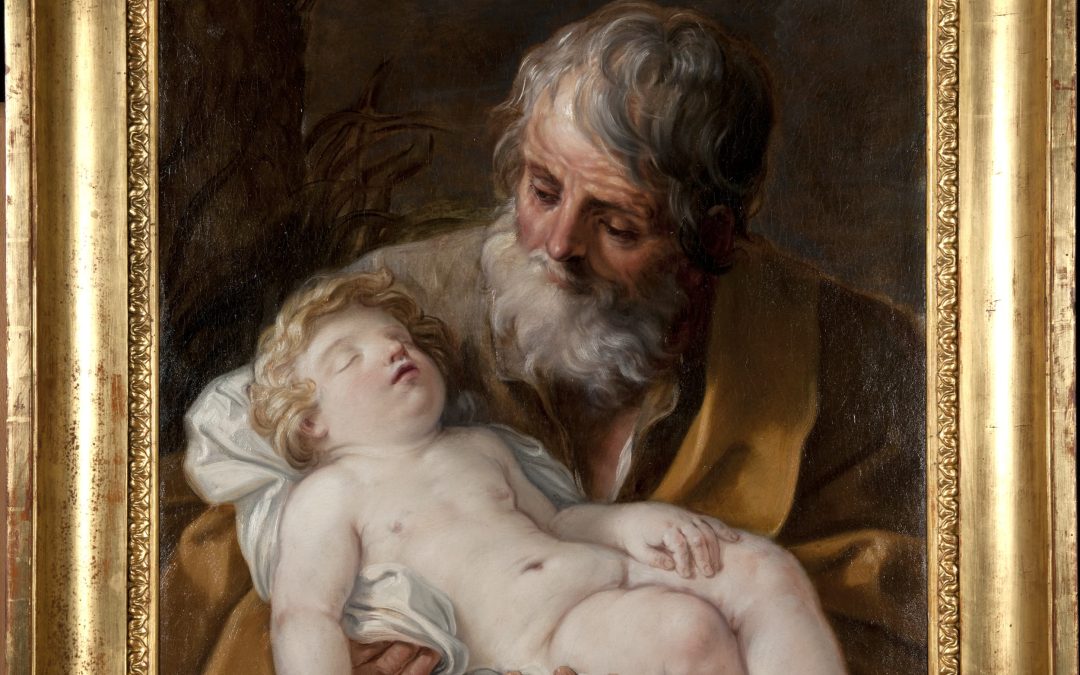
The first part of this room is dedicated to the life of Jesus. Important pieces on display include a “St Joseph with Sleeping Christ”, a very popular subject in the 17th century on account of its intimate, family dimension, and here attributed to a painter from the circle of Guido Reni. The “Infant St John with the Lamb” is by Montalto, an important protagonist of Lombard Baroque painting. The next piece is also from Lombardy’ s “Baptism of Christ” in the style of Leonardo, close to the methods of Marco d’Oggiono. Continuing our visit, you will note an interesting painting illustrating the “Healing of the Blind Man” from the Tuscan school. It is populated by curious personages including one wearing glasses. The “Denial of Peter” has a feel of Caravaggio, with its compelling use of light and shade. The succession of works takes us towards the narration of the Passion of the Christ, on to the particular wooden inlays, a copy of “The Dead Christ Mourned” by Annibale Carracci, now in the National Gallery in London.
The section continues with two examples of subjects about the lives of the saints, with the dramatic “Martyrdom of St Lawrence” attributed to Daniele Crespi, great Lombard artist who died of plague in 1630, and the “Death of St Francis Xavier”, comforted by the Virgin and saints in the last moments of his life, alone and abandoned on an eastern island, where he had been a missionary.
Now move to the opposite side of the room and continue the route from left to right, starting with the two lovely 17th-century canvases with subjects taken from mythology – the “Rape of Ganymede” and the “Hercules at Rest” – based on Carracci’s frescoes in Palazzo Farnese, Rome, and the “Prometheus” by Piacenza artist Gaspare Landi, dating back to 1782. The pose is inspired by the famous group of sculptures, Laocoön and His Sons, which the painter was able to admire during his period in Rome.
The visit continues with subjects from a genre that was much loved between the 17th and 18th centuries, like the very elegant figure of “Astrology” who is measuring a terrestrial sphere with a compass; the “Flautist” attributed to Venetian artist Giuseppe Angeli, and some still life works.
You should note the “Trompe l’oeil”, thought to be the work of Filippo Abbiati and dating back to the late 17th century, an example of a popular art form widely used in the period and which aimed to reproduce real life scenes with extraordinary mimicking effects, and painstaking attention to detail, to “fool the eye” and disorientate the onlooker, who is forced to wonder what is painted and what is real. Here the artist plays with the effect of the painting within a painting, thanks to the hanging prints, and has fun with surprising touches such as the painted fly on a wooden panel.
Share your location
View full screen
Choose another point of interest
Zoom in
Zoom out
La pagina richiesta non è stata trovata. Affina la tua ricerca, o utilizza la barra di navigazione qui sopra per trovare il post.
La web app è ottimizzata per essere navigato da dispositivi smartphone e tablet.


The permanent exhibition layout in the museum is set out over two floors in the building, where you can admire more than 140 works in 13 sections. Our visit begins on the ground floor, in the cloister, which is home to Roman relics, displayed in the form of a lapidarium. Archaeological finds tell us that Monza existed in ancient times, but it was with the Romans that the village saw the greatest development: an imposing bridge was built to pass over the River Lambro, through the centre and make travel to the Alps easier. The community of Monza is documented by the numerous burial stones that have come to light in the form of re-purposed materials in many city buildings. Inscriptions on these relics – mainly from cemeteries or votive altars – tell us about veteran legionnaires, freedmen, and families devoted to the divinities of Olympus.
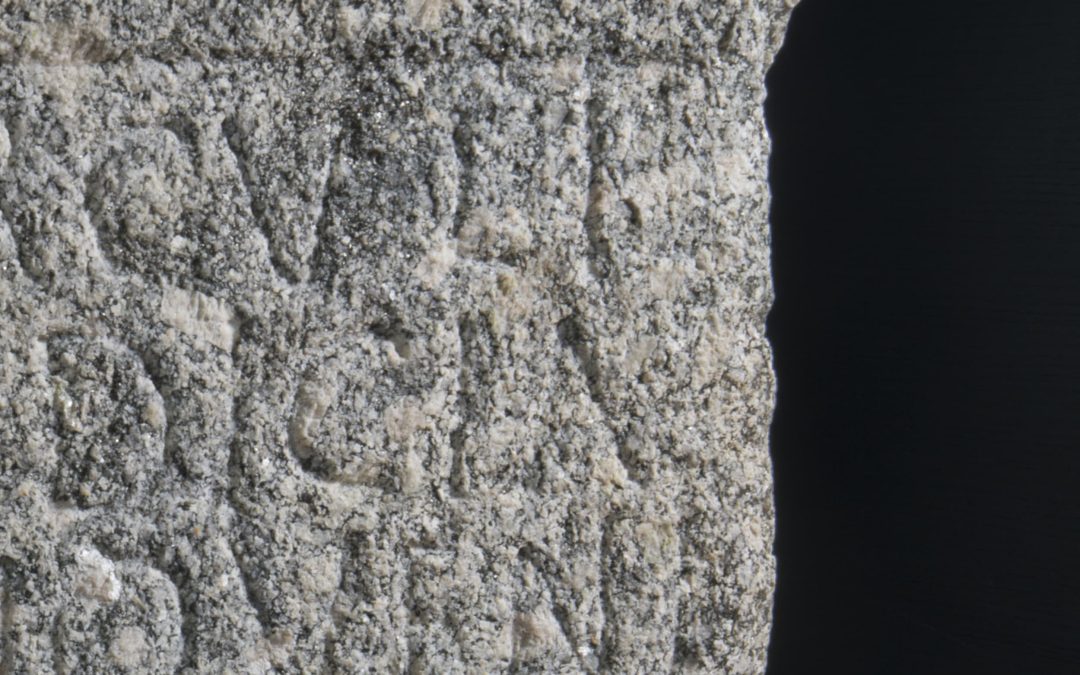
A Corinthian half capital from a very large building (now lost) stands out among the pieces displayed in the cloister, together with the lid to a sarcophagus from the late Roman period, but re-used in the Middle Ages, as shown by the carved inscription.
Before you go into the museum, pause a moment to look at the mediaeval measure, a stone of notable size used by the Municipality to guarantee official measurements of weight, length and width for tiles and bricks, for example.
Now enter the museum and walk into the oval room on the left of the ticket office, where you will see the “Ara dei Modiciates”. This is the top part of a votive altar dedicated to Hercules by the young people of Monza – the Modiciates. The inscription is the oldest proof of the city’s original name, Modicia, which would go on to become Modoetia in the mediaeval period and finally, Monza. This stone was donated by Count Carlo Ghirlanda Silva in 1874. It was found in the English-style garden of the family villa in Cinisello Balsamo, where it had been placed as an ornamental feature. The donation in fact led to the creation of the art collections owned by the municipality and intended for display in the museum. It was given by the owner in the hope that a public museum would be established.
Further proof of Monza’s ancient origins can be seen in a display case containing fragments of swords and pins dating back to the Bronze Age, found in the city at the end of the 19th century. This room also contains different relics from the Middle Ages, like the bronze bushel used for official measurement and the decorative architectural features from buildings long-since demolished. In the centre of the wall is a detached fresco of the “Deposition of Christ”, dating back to the latter half of the 16th century. The fresco decorated a room in the Casa degli Umiliati when it was still inhabited by members of the order.
The route through the ground floor continues with a distinct time shift, from the Middle Ages to the contemporary period. Come out of the oval room and continue to the right. The next room contains works by award-winning young artists from the Biennali Giovani Monza, important occasions to explore developments in expressive techniques in the 21st century. The works on display here feature a wide variety of techniques and materials, ranging from sculpture to painting and photography, which showcase the creative freedom of young generations of artists.
Share your location
View full screen
Choose another point of interest
Zoom in
Zoom out
La pagina richiesta non è stata trovata. Affina la tua ricerca, o utilizza la barra di navigazione qui sopra per trovare il post.
La web app è ottimizzata per essere navigato da dispositivi smartphone e tablet.


The city of Monza, now capital of the province with a population of almost 123,000, which makes it the third largest in Lombardy, has its roots in the far-off Bronze Age, as can be seen from relics uncovered there in the late 19th century. The settlement, next inhabited by the Gallic tribes of Insubria, stood along the banks of the River Lambro. With the Roman conquest of the area, the village became more and more important as a road junction and trading post. The completion of a brick bridge that made it possible to cross the River Lambro – much larger then than it is today – was essential to the development of the vicus; Monza, which was known as Mondicia, was thus situated along the important directrix routes from Mediolanum [Milan] to the north and the lakes and crossings in the Alps. With the fall of the Roman Empire and the arrival of the barbarians, Monza enjoyed a period of great splendour. This was thanks to the presence of the Lombard court of legendary queen Theodolinda, who promoted the conversion to Christianity, fought Arian heresy, and founded the basilica dedicated to St John the Baptist.
The Middle Ages were a flourishing period for the city, whose name evolved to Modoetia. It was an important centre for trade and markets, enjoyed the favour of the rulers of the Holy Roman Empire – thanks also to the presence of the famous Iron Crown – and it also underwent large-scale urban development, with the building of churches and the municipal palace, known as Arengario. Monza then came under the rule first of the Visconti family and then of the Sforza family. It was protected by city walls and a castle, located in the northern sector of the city. Spanish rule led to the enfeoffment of the city: Emperor Charles V assigned it to the De Leyva family, one of whose members, Marianna (b. 1575), was forced to take religious vows and who would become famous as the Mother Superior and Nun of Monza. The fiefdom was purchased by the Durini family in 1648. The period of Austrian rule left Monza with the heritage of the Royal Villa, designed by Piermarini for the son of Maria Theresa, governor of Lombardy. Napoleon is responsible for the creation of the Park, a model farm and hunting estate. The Savoy family used the Monza palace as a holiday home; it was particularly loved by Umberto and Margherita, until the tragic events of 29th July 1900, when anarchist Gaetano Bresci killed the king. The 20th century saw Monza as protagonist of great innovations. It was the capital of the hat-making industry, with dozens of hat factories. The city was also propelled into the modern era with the building, in 1922, of the Autodromo, a cutting-edge racetrack in the growing world of the automobile.
Share your location
View full screen
Choose another point of interest
Zoom in
Zoom out
La pagina richiesta non è stata trovata. Affina la tua ricerca, o utilizza la barra di navigazione qui sopra per trovare il post.
La web app è ottimizzata per essere navigato da dispositivi smartphone e tablet.
The Humiliati [Italian Umiliati] were a mediaeval religious order – no longer in existence – dating back to the 12th century. They were particularly widespread in northern Italy and practised humility (hence the name), and evangelical poverty. They lived from manual work, also dedicating themselves to acts of charity, substantially following the Rule of Saint Benedict.
Based on the doctrines of poverty, resulting from ideals for a return to the origins of the Gospel – this was the period in which the Franciscan order was being formed – the order of the Humiliati was recognised by the Church in 1201. Thanks to its activities in trade, it became a strong centre of economic power with influence throughout the territory, and numerous houses and institutions. The order was a constant presence between the 13th and 16th centuries, i.e., from its founding to its gradual decline, which culminated in dissolution by St Charles Borromeo.
The order had both male and female branches, as well as a third order of lay brothers. The Humiliati were widespread in the Monza area, arriving at a total of sixteen settlements. Some, which had churches and convents housed the members of the first two branches, male and female, who chose to live their lives and follow the rule of the religious community. Other complexes were used for manufacturing or assistance activities, while the convenium was a meeting place for the lay members of the order – those with families and their own professions, but who also shared the vocation for the humble life.
The Humiliati were disbanded by St Charles Borromeo in 1571, having lost the evangelical spirit with which they had begun. Their properties were given to other religious orders or charity works.
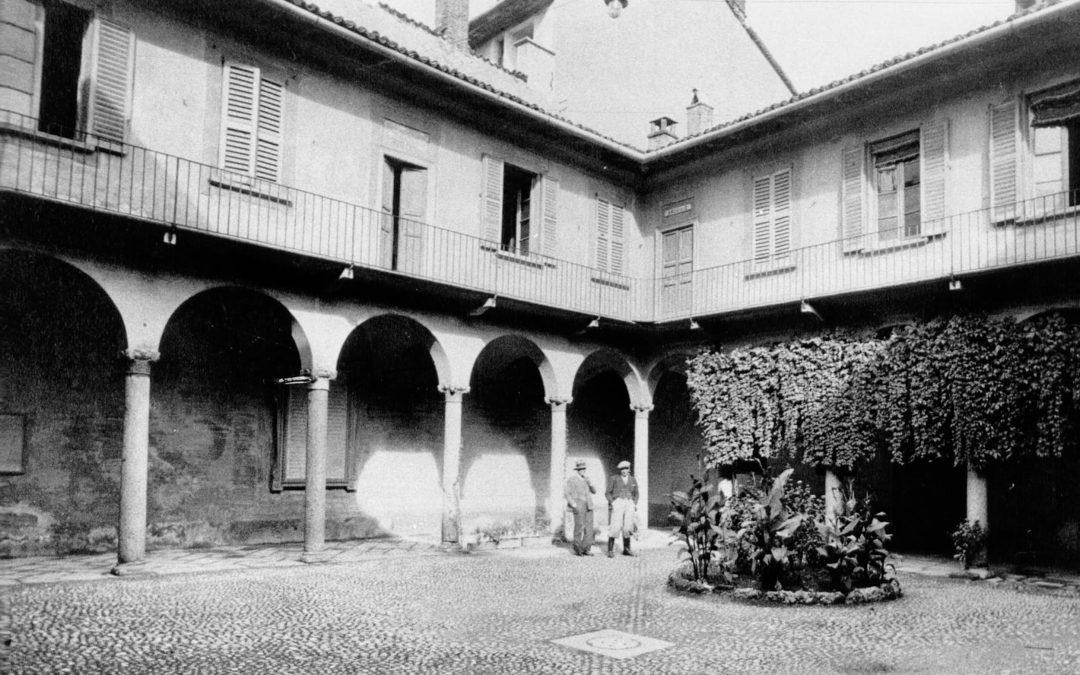
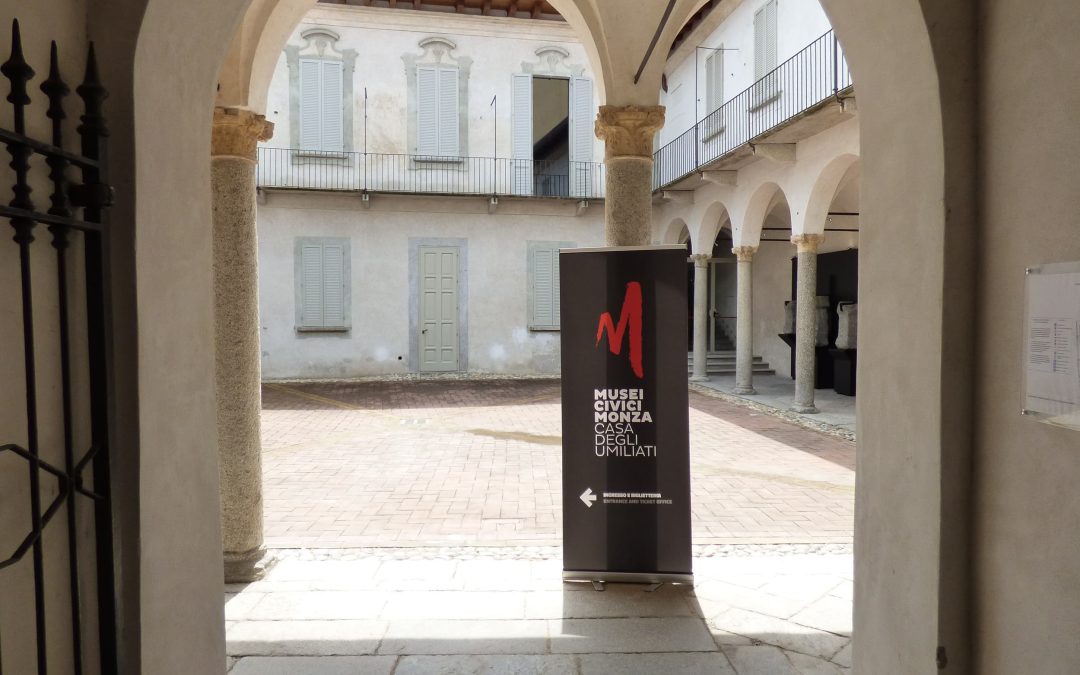
The Casa degli Umiliati – now home to the Musei Civici – is a convenium. It is first recorded in the early 13th century and the Hospital of San Bernardo was added in the mid-14th century. In 1767, when the order had been disbanded for some years, Monza historian Maurizio Campini notes that the House was referred to as the “Conference or Convocation of the first Humiliati”. Above the entrance door was a fresco (now lost) of the four Delegates of the “Magnifica Comunità Monzese”, seated around a cloth-covered table and focused on distributing alms to the poor, a symbol of the charitable actions that took place at what was then the “Luogo Pio del Convegno” and adjacent hospital, now completely lost. After the abandonment of its religious function, the building served various purposes and has undergone different alterations. Nonetheless, some of the original 15th-century features can still be noted, as can others from the 18th century, while the whole building is characterised by a series of anomalies, due its complex history and to numerous interventions, Note, for example, the irregular shape of the courtyard and portico, and the asymmetrical entrance.
Share your location
View full screen
Choose another point of interest
Zoom in
Zoom out
La pagina richiesta non è stata trovata. Affina la tua ricerca, o utilizza la barra di navigazione qui sopra per trovare il post.
La web app è ottimizzata per essere navigato da dispositivi smartphone e tablet.


Welcome to the Musei Civici di Monza. Our journey through the museum that contains the art works belonging to the city of Monza starts here. It has been built up over more than a century, thanks to the generosity of collectors and enthusiasts who have added to Monza’s art heritage over time. We have a collection of hundreds of works and thousands of antique prints, carefully conserved in our repositories. Here, you can admire a selection of these works, which represent the richness and variety of the collection.
The museum has a long history. It was officially founded in 1935 to display to the public a series of works that had been donated to the municipality beginning in 1874. The initial donation is a piece dating back to Roman times, which you can see in the first room of the museum. Many more donations and bequests have followed since then, including the core of the collection, bequeathed by Eva Galbesi Segrè in 1923, which we will talk about once we visit the first floor.
Given the increasing number of available works that deserve to be seen by the public, the Municipality of Monza decided to set up a museum, which was initially located in Royal Villa of Monza. During the 1960s, the museum was split across two sites: the Gallery of Paintings remained in the royal palace, while the archaeological collections and mediaeval relics were put on display in a room in the Arengario, the old municipal palazzo in the heart of Monza.
After both sites were closed in the 1980s, the museum was reopened, in 2014. It was placed in this building, known as the Casa degli Umiliati, which had undergone lengthy restoration work to adapt it to the very latest standards for preserving this heritage and displaying it safely.
The Humiliati [Italian Umiliati] were a mediaeval religious order – no longer in existence – dating back to the 12th century. They practised humility and poverty, and they lived from manual work, also dedicating themselves to acts of charity. This building, once known as a convenium and now as the Casa degli Umiliati, was a place for meeting and prayer set out, like a convent, around a cloister. From the late 16th century, it began to be used as a place for charity for the poor, then public offices and schools, until it was renovated to house the Musei Civici di Monza. The mediaeval structure has undergone many alterations, although we can still enjoy the square cloister with the surviving portico on two sides, and the elements in the museum itself, including windows and ceiling decorations, mainly from the 18th and 19th centuries.
In 2023, thanks to NRRP funds from the EU, the museum was able to acquire different instruments to guarantee autonomous access to all visitors, including people with physical, sensory, and developmental disabilities. The route is marked with signs and aids for a totally inclusive visit.
Now you are coming to the cloister. Our visit starts here.
Share your location
View full screen
Choose another point of interest
Zoom in
Zoom out