
 Musei Civici di Monza and the Casa degli Umiliati
Nessun risultato
La pagina richiesta non è stata trovata. Affina la tua ricerca, o utilizza la barra di navigazione qui sopra per trovare il post.



La web app è ottimizzata per essere navigato da dispositivi smartphone e tablet.


Our journey through the museum concludes with a series of works that depict Monza or which are closely tied to the city’s history, in tribute to the local area. On one of the walls is an absolute masterpiece: the “View of Contrada Nuova” painted by Brescian artist Angelo Inganni in 1850. In one of the most fertile moments of 19th-century production of painstakingly detailed urban views depicting everyday life, this painting offers a view from under the porticoes of Arengario looking towards Contrada Nuova (now Via Vittorio Emanuele) as far as the Ponte dei Leoni bridge. Alongside Inganni’s painting, we see another historic building from the heart of Monza, the Duomo, dedicated to St John the Baptist: the view of the apse shows an unusual perspective of the monument, from the side looking out on the River Lambro, animated by small figures. The two paintings that follow show us precious historic evidence of two monuments that no longer exist: the watercolour by Giosuè Bianchi, father of Mosè, depicts the “Dazio di Porta San Biagio”, one of the gates opened in the mediaeval city walls built by the Visconti family in the early 14th century. The walls circled the town in a ring shape, meeting at the Castle, as shown in the painting above. All that is left of the Castle are some remains near the River Lambro: already crumbling in the past, as can be seen from the gutted tower, it was demolished together with the walls during the 19th century, when industrial and urban development in of Monza saw the wall as an obstacle to expansion and business.
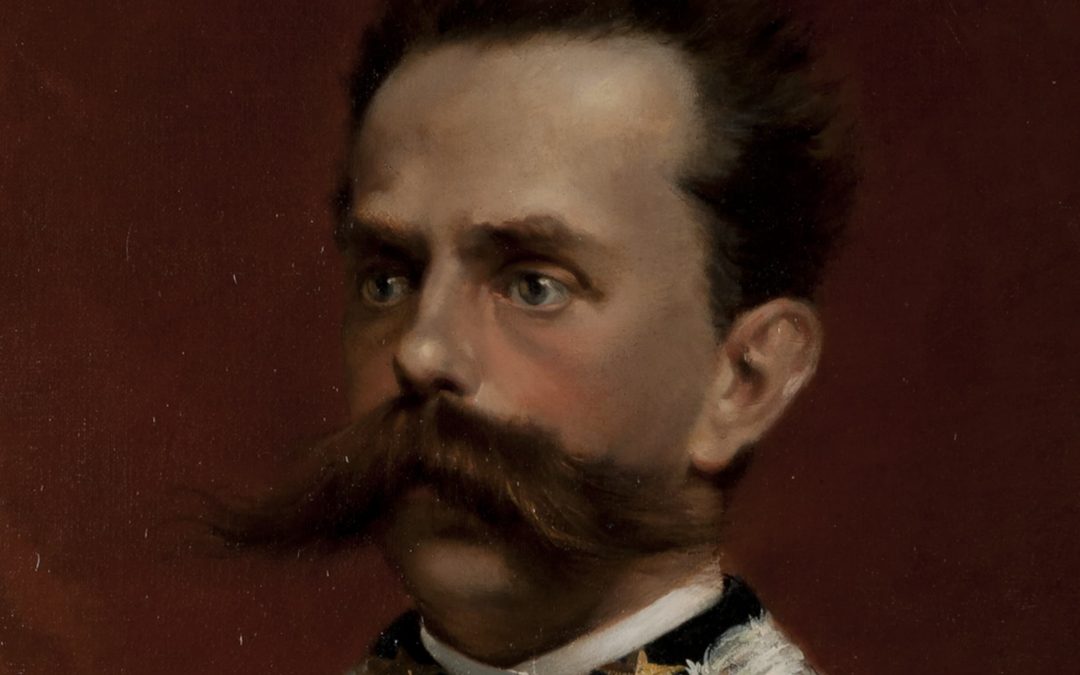
The interior of the Duomo is evoked – rather than precisely represented – in the painting by Mosè Bianchi which delineates a subject dear to painting from the period, after the Unification of Italy: the colours green, white and red stand out in the shade of the nave, a clear reference to the Italian flag. Umberto I, painted here by Gerardo Bianchi who was also the court photographer in Monza and who portrays his subject with a modern, photographic style, opens our gaze onto the Savoy’s presence in the city, also connected to the sketch of the decoration of the Royal Room, as shown in the preparatory cartoon we saw before.
To conclude our tour are two fine works from the 17th century. The processional banner, with its rich embroidery and coloured glass imitating precious stones, takes us back to the dark period of the plague in 1630, as told by Manzoni: Monza suffered pestilence and the inhabitants invoked divine intervention, offering to create a banner to carry round in procession. Alongside the Virgin and Child are the two patron saints of Monza: on the left, it is possible to recognise John the Baptist, patron saint since the period of the Lombards, and on the right, Gerardo dei Tintori, the Monza saint who founded a hospital for the poor and needy in the 12th century. Although it now has a modern location, Monza’s hospital is still named after the founding saint, whose life and miracles are told – complete with captions – in the devotional painting with the figure of the saint and his canonic attributes – a stick with cherry branch in reference to one of his miracles.
Your visit to the museum concludes here; you can either go back through the rooms or head directly for the exit by returning to the ground floor. We hope you have enjoyed your visit. Please leave your thoughts and suggestions, by completing our short questionnaire, available at reception. Goodbye!
 Share your location
 View full screen
 Choose another point of interest
 Zoom in
 Zoom out


La pagina richiesta non è stata trovata. Affina la tua ricerca, o utilizza la barra di navigazione qui sopra per trovare il post.


La web app è ottimizzata per essere navigato da dispositivi smartphone e tablet.


The Sala delle Capriate is home to a series of works that narrate a fundamentally important experience in the city during the 1900s. In the period between the two World Wars, Monza was home to the Higher Institute for Industrial Arts, better known as ISIA.
This school, located inside the Royal Villa, which had been abandoned by the Savoys after the assassination of King Umberto I in Monza on 29th July 1900, trained a legion of young artists using a multi-disciplinary, practical approach with the example of important artists, offering the possibility to experiment with different avantgarde techniques in its teaching laboratories, as well as with crafts, applied arts, painting, and sculpture.
Iron, ceramics, wood and metals, but also advertising graphics, life drawing and decoration are just some of the subjects in which the young students could put themselves to the test: the museum still has a rich selection of works from the school, and which can be ascribed to both students and teachers. These include outstanding pieces by two of Italy’s most important Italian sculptors in the 20th century, Arturo Martini and Marino Marini. Marini is responsible for the plaster of “Leda and the Swan” in the centre of the room. It is an imposing, pared back statue that reflects the artist’s love of classical sculpture and for the synthesis of its masses. Marino Marini leaves Monza with his bas relief of “St George and the Dragon”, first proof of the theme of horse and knight. The sculptor is depicted by Costantino Nivola, one of his most gifted students, part of a group of talented young artists from Sardinia that included Salvatore Fancello. The painting class was taught by Raffaele de Grada and Pio Semeghini: De Grada is the artist behind several painted views of the centre of Monza, views destined to disappear with the urban development interventions of the 1930s, such as “via dei mulini” in the painting displayed on the wall next to Marino Marini’s bas relief. The Park was obviously one of the most popular subjects for the artists in that period: corners and buildings were interpreted in modern style, using an evocative rather than stately manner, like in the paintings of Nivòla, Lilloni and Lattuada.
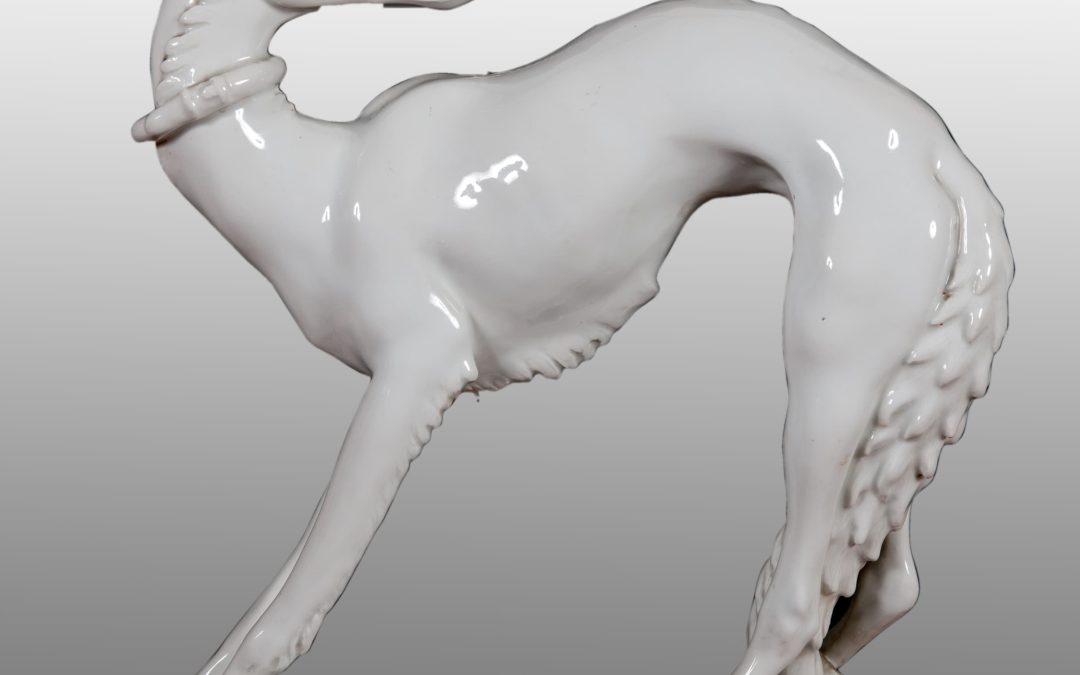
With the items on display behind you, you can look in more detail at another interesting subject of the period, documented in the museum: at the same time as the ISIA, “International Exhibitions of Decorative Arts“ were also promoted to boost the updating of national artistic culture, using comparisons with experiences outside Italy. Four of such shows were held Inside the Royal Villa of Monza: the first three biennales, in 1923, 1925, and 1927, and the fourth in 1930, which was the last before the event was moved to what was then the “Triennale” in Milan. The Biennale events brought artists from all over Italy and Europe to Monza: furniture and handcrafted items were put on show to create effective examples of how the arts could be combined. Three pieces displayed in the museum come from the exhibitions of the time: the “Vaso Forma Monza 91” by Guido Andlovitz, the “Specchio” by Dagobert Peche and the “Levriero” by Italo Griselli.
Your visit continues into the glass tower, with entrance behind a wall where you can admire a copy of a period photo showing young pupils at work in the classrooms of the ISIA. Here you will see a selection of the many ceramic works produced by students and teachers. Vases, amphorae, and mosaic compositions using tiles illustrate the creativity and modernity of the expressive language used, first and foremost, by Salvatore Fancello, an artist who died too young, during the second World War, which evokes memories of his Sardinia.
Share your location
View full screen
Choose another point of interest
Zoom in
Zoom out
La pagina richiesta non è stata trovata. Affina la tua ricerca, o utilizza la barra di navigazione qui sopra per trovare il post.
La web app è ottimizzata per essere navigato da dispositivi smartphone e tablet.


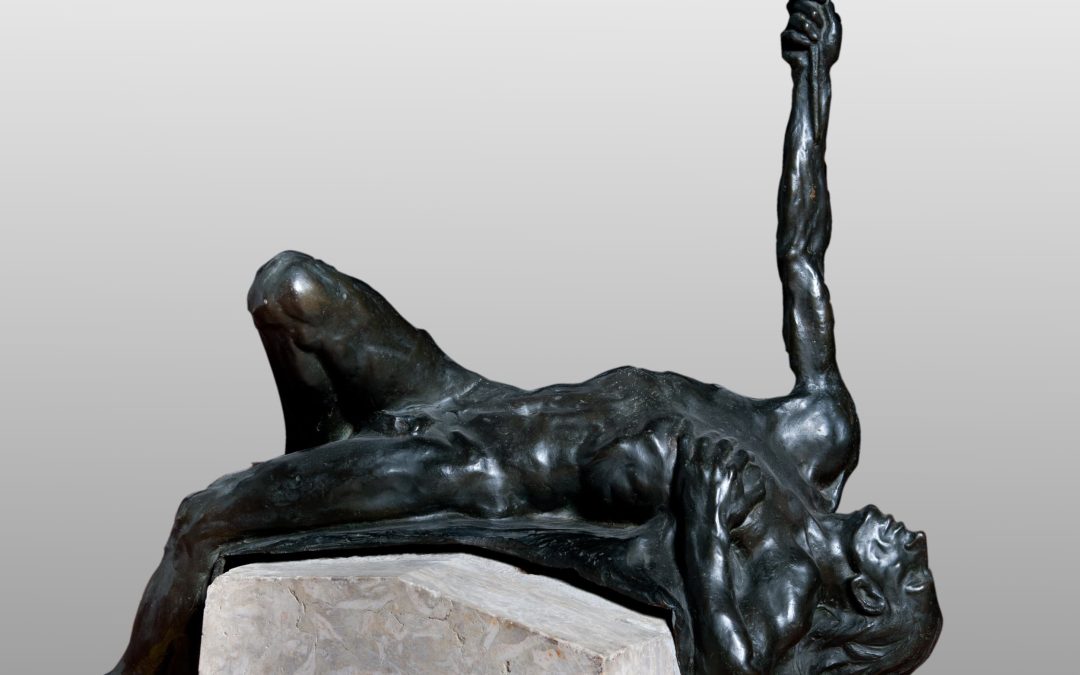
The museum area dedicated to the 20th century begins with some pieces by young artists who, in early 20th-century Monza, looked to avantgarde experiences and began to take paths that would renew local art. Gathered around the Cenobium group, a free and informal partnership of which critic Mario Buggelli was also a member and who we see here portrayed by Achille Funi, the young Eugenio Baioni, Guido Caprotti and Anselmo Bucci shared their perspectives on similar subjects. Evidence of this is in the three markets, the paintings that the three artists dedicated to the market place (now Piazza Trento e Trieste) animated by stalls for the traditional fair of San Giovanni. Brand new composition styles; views foreshortened for expressive effect; and deep, vibrant colours to portray the lively, loud atmosphere of the square, with its people and animals. Anselmo Bucci is the painter who more than any other, takes the path towards the renewal of artistic technique: he went to Paris, where he mixed with big names from the avantgarde – the “Pont Saint Michel” on display comes from this period – and, once back in Italy, he became a protagonist of the Italian Novecento, the movement founded by Margherita Sarfatti. Baioni, who would never leave Monza, focused on bronze sculptures and took part in the call for bids to make the monument to the fallen, with a sketch entitled “The Sacrifice”, while Caprotti left Italy to settle in Spain.
On the right side of the room – known as Sala delle Capriate thanks to the imposing structures made in wood recovered from the Casa degli Umiliati – are the paintings that came to the museum through the “Città di Monza” Painting awards organised in the 1950s. These competition-exhibitions brought works to Monza by Mario Radice, important exponent of Rationalism, with his “C.F. Composition” from the 1930s, when he collaborated with architect Giuseppe Terragni.
The city award had the merit of opening the collection’s horizons to the very latest experiences in Italian contemporary art, thanks to the participation of renowned artists at national level. Award-winners also included Giulio Turcato who, with his “Abstract Composition”, made between 1952 and 1953, manifested his adherence to the artistic movements behind abstractism.
Thanks to a donation, the collection now includes a pastel work by Renato Birolli, “The Mystics”, dated 1935 and featuring an exploration of the endless lyrical possibilities of colour and art as an act of poetic freedom.
Roman artist Fausto Pirandello offers a different experience with his award-winning “Nude in the Mirror”. The strongly expressionist features isolate the artist from the cultural world around him, without making him a stranger to it. Here he opts for a path to bring together the dualism of the period between abstractism and realism, using a language that does not renounce reality, but rather summarises and geometrizes it.
Share your location
View full screen
Choose another point of interest
Zoom in
Zoom out
La pagina richiesta non è stata trovata. Affina la tua ricerca, o utilizza la barra di navigazione qui sopra per trovare il post.
La web app è ottimizzata per essere navigato da dispositivi smartphone e tablet.


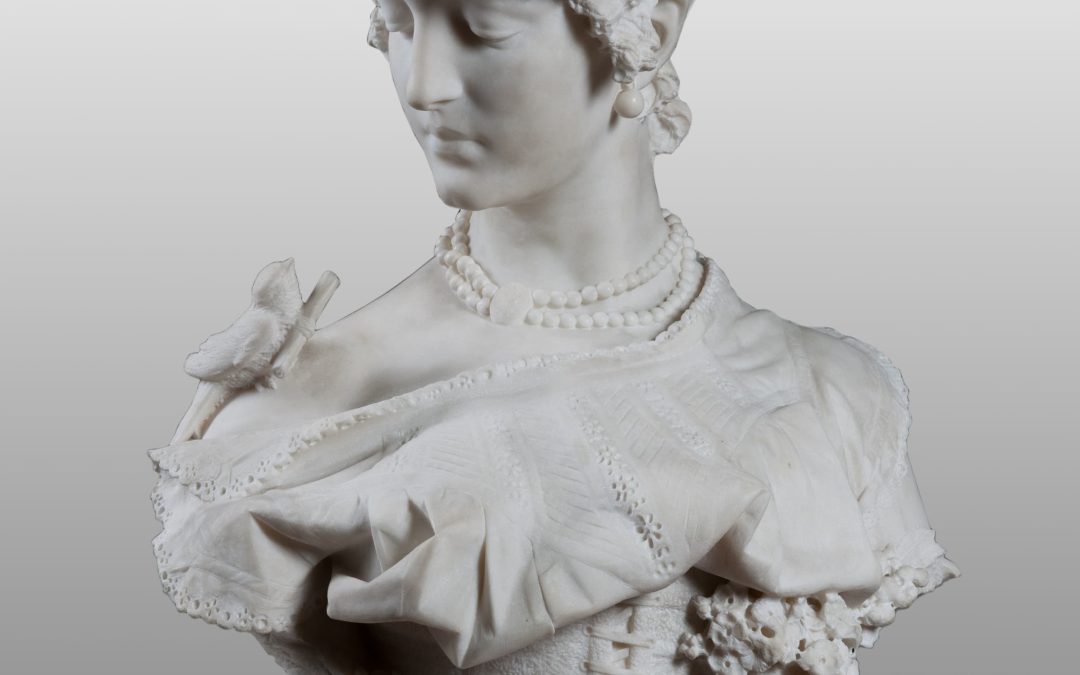
The next section of the museum is home to a collection of paintings and sculptures that take the visitor through the main artistic events of the 19th century. Our collection begins with Romanticism with works that can be dated back to the middle of the century. We are met at the entrance with precise, turned marble forms by Giuseppe Grandi who has depicted a young woman in elegant clothes and jewels, with a bird bringing her a message, perhaps a love letter. On the right-side wall of the room, you will see examples of painting with a literary inspiration, as typically found in the mid 19th century. Piedmont artist, Eleuterio Pagliano re-evokes a dramatic episode inspired by real events, the death of Titian’s daughter. His small painting was particularly appreciated by his contemporaries, so much so that another version can be found in the Gallery of Modern Art in Milan. Here Mosè Bianchi, with “After the duel”, shows his younger works, when his romantic and literary ideals, as inspired by Mediaeval subjects, were still intact. On the wall opposite, a “Landscape with Boats” attributed to Luigi Riccardi marks a move towards a realistic representation of the scene and human activities. This is even more evident in works from the second half of the century, such as the “Rustic courtyard” by Mosè’s brother, Gerardo Bianchi, displayed to your right.
We can follow Pompeo Mariani in his movements outside Monza, from the rice fields in the valley immortalised immediately before a storm, to the splendid seascapes of Liguria, with the animated life in the port in Genoa with impressions made vivid by reflections of light on the sea. Mariani’s activities towards the end of the century, on the threshold of the 20th century overlaps other movements for renewal, as shown in the experience of the Macchiaioli and Divisionism. In 2023, the museum was able to benefit from the donation of a small, precious painting by Giovanni Fattori: a “Cavalryman”, representing the painter’s synthetic, structured style. You can see it displayed at the end of the corridor, on the left. The change towards divisionism can be seen in later works, hanging on the right-hand wall: the “Alpine Cottage” by Achille Tominetti, and the “Alpine Pass” by Guido Cinotti, with extraordinary effects created using light and depth, a painting to be admired close up to appreciate the brush strokes, and also from farther away, to see the overall view.
Continuing back along the corridor in the opposite direction, you can see how the nineteenth-century sculptures reflect constantly changing artistic thought. The plaster by Ambrogio Borghi depicts the whole figure as a scenographic “Berenice” with thick hair, a preparatory model for the final statue. The plaster is less detailed with a more vibrant surface under the light, which is well evident in the later works of Ernesto Bazzaro. To him we owe the small bronze group, “In carovan” and the plaster bust of Achille Mapelli, garibaldino and well-known politician in Monza. With their irregular shapes, moulded by light, the pieces from the late 19th century are based on the methods of Scapigliatura and look to the fascination of orientalism.
Share your location
View full screen
Choose another point of interest
Zoom in
Zoom out
La pagina richiesta non è stata trovata. Affina la tua ricerca, o utilizza la barra di navigazione qui sopra per trovare il post.
La web app è ottimizzata per essere navigato da dispositivi smartphone e tablet.


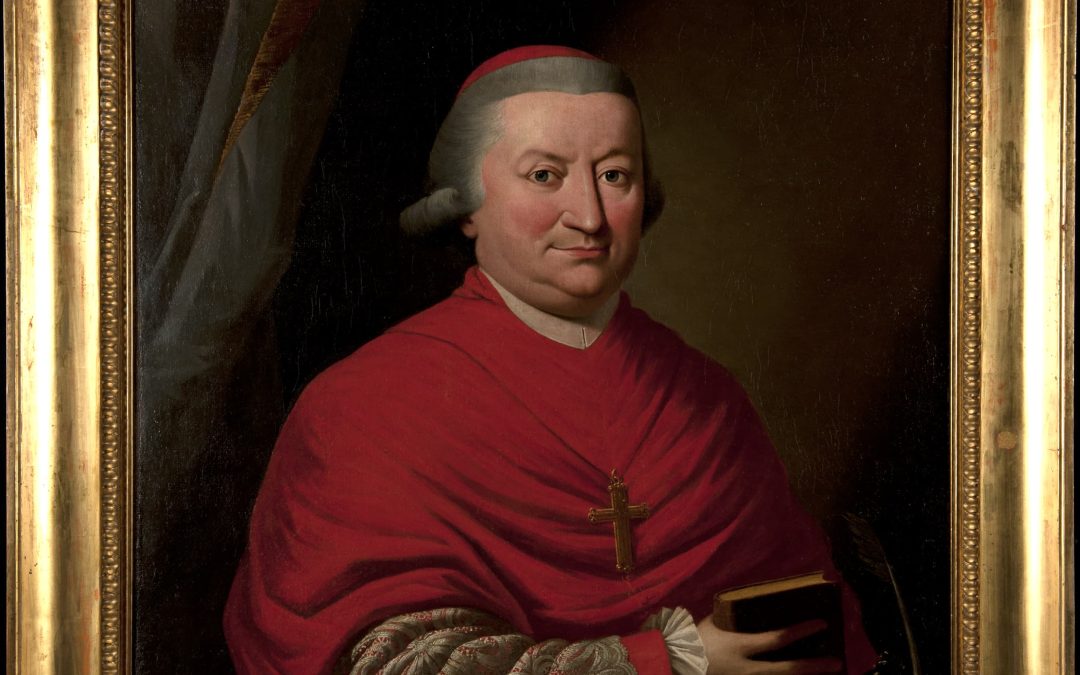
Continuing our visit to the museum, you will see that a whole corridor has been set out like an old portrait gallery, similar to those found in noble homes. Even the materials chosen, such as the damask upholstery and the way the portraits have been hung close together make this similar to the galleries of the past. The portraits displayed here were chosen in such a way as to provide a panorama of the development of the portraiture through the centuries, from the oldest in our collection – a portrait of Giuliano della Rovere, religious patron who lived in the late 16th century – to works from the first half of the 1900s. After admiring the very elegant 17th-century Dutch portrait of Maurice, Prince of Orange wearing the Order of the Knights of the Garter, we move on to 18th-century Monza, with portraits of two illustrious protagonists in the city’s history.
The first is Cardinal Angelo Maria Durini, member of an illustrious feudal family who built the villas of Mirabello and Mirabellino, now inside the Park of Monza. The second is the registrar Carlo Antonio Sirtori, member of a family of notable authors of interesting “Annals”, with their rich content of precious information. In both portraits we can see the typical technique of the period in which, to make it easier to identify the subject, they were painted leaning on a shelf of books, letters or documents from which would be possible to deduce their name or position.
Nineteenth-century portraiture is introduced here by one of the museum’s masterpieces, the portrait of a young woman by Francesco Hayez. We are uncertain of the woman’s identity, but the intimate tone of the portrait, the pose of its subject and her direct gaze lead us to think that she may be Carolina Zucchi, loved by the young Francesco during his period in Milan. Alongside this is a portrait of doctor and poet Giovanni Raiberti, a leading figure in the Risorgimento, depicted in a courtly pose that purposefully evokes the famous portrait of Alessandro Manzoni.
The second half of the 19th century again focuses on artists from Monza, valid portrait painters such as Mosè Bianchi, Mariani, and Spreafico. As a reflection of a changing society, the subjects portrayed are not noble or members of the clergy, but industrialists and journalists; the style is faster and more immediate, capturing the changing expressions of the face with flaking touches of colour and light. The same attention is seen in self-portraits by the artists, captured, as in the case of Mariani, who paints himself in a pose like that of Titian, or hints of restlessness as in the face of Monza artist Eugenio Baioni, painter and sculptor, and great friend of Marche artist, Anselmo Bucci, who not by chance concludes the collection with a canvas from 1931.
Share your location
View full screen
Choose another point of interest
Zoom in
Zoom out
La pagina richiesta non è stata trovata. Affina la tua ricerca, o utilizza la barra di navigazione qui sopra per trovare il post.
La web app è ottimizzata per essere navigato da dispositivi smartphone e tablet.
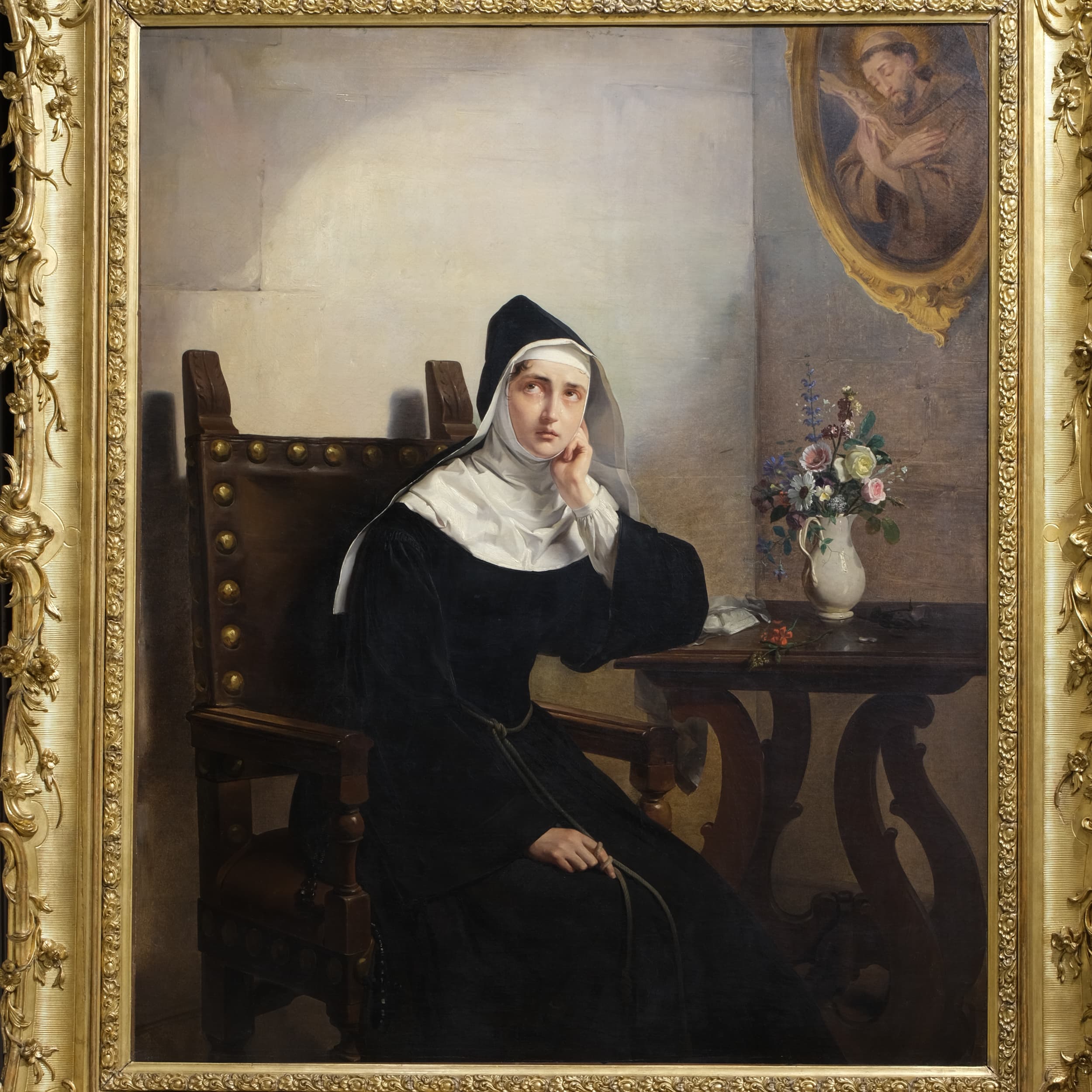
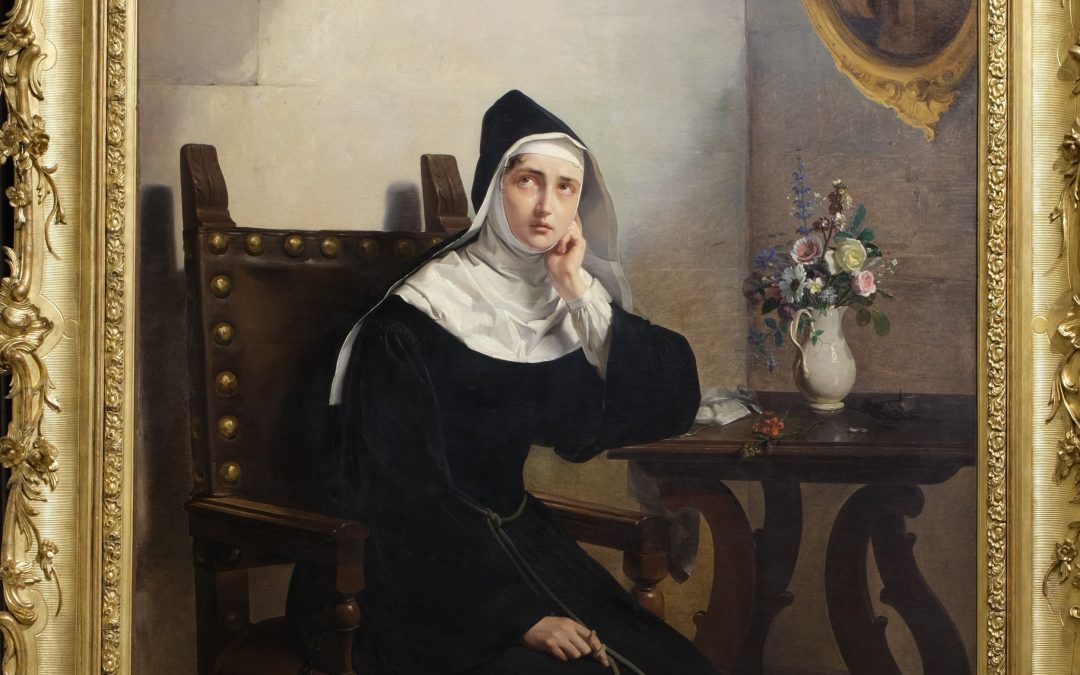
The painting by Giuseppe Molteni displayed in this room shows us a figure that we all know as the Nun of Monza, immortalised by Alessandro Manzoni in “The Betrothed”. In fact, the events of the novel are based on a real story, which took place between Milan and Monza in the period between the 16th and 17th centuries. Manzoni was familiar with this story, thanks to the Historiae Patriae, written by historian Giuseppe Ripamonti, who reported the terrible plague of 1630, and narrated events when the woman was still alive and exchanging letters with Cardinal Federico Borromeo.
In the actual story, the nun was a noblewoman called Marianna, born in Palazzo Marino, Milan, in 1575. Her mother was in fact Donna Virginia Marino; her father, Don Martino de Leyva, was a member of one of the most influential, respected families in the Spanish nobility, and owner of the fiefdom of Monza. To avoid the breakup of this inheritance, Marianna’s father forced her to take holy orders and in 1589, at just 14 years of age, she was sent to the monastery of Santa Margherita in Monza, where she took the name of Sister Virginia Maria.
Here she became the Mother Superior, with de facto feudal power over Monza, and the love story between Sister Virginia and Gian Paolo Osio, from a neighbouring palazzo, began inside the convent walls. The young lovers, aided by other nuns and some of the townsfolk, were able to remain together, in secret, for many years. During this time they had two children (the oldest one stillborn and a daughter, recognised by her father).
But their love story could not stay hidden forever, and in 1607, the threat of a lay sister to reveal the truth triggered a series of murders and violence that reached the ears of the Governor of Milan and Cardinal Federico Borromeo. Osio fled but his fate was sealed and he was betrayed and killed, but not before helping their accomplice nuns to escape, then trying to kill them. Sister Virginia was imprisoned in a monastery in Milan, where she was put on trial. Between interrogations and torture, they sentenced all those involved: the deeds of the trial – kept secret for many years – reveal the dramatic events in their entirety, through to the sentence. The Mother Superior, abandoned by her family, was sentenced to be closed in a minuscule cell with just a single small opening for food, air and a little light. These were hard years of atonement that in the end led Cardinal Federico to grant her a pardon and the possibility to leave her prison. Sister Virginia lived to a ripe old age for the time. She survived her inhuman imprisonment and the terrible plague of 1630, dying in 1650 in the Milanese convent in which she chose to end her days.
Share your location
View full screen
Choose another point of interest
Zoom in
Zoom out
La pagina richiesta non è stata trovata. Affina la tua ricerca, o utilizza la barra di navigazione qui sopra per trovare il post.