
 Musei Civici di Monza and the Casa degli Umiliati
Nessun risultato
La pagina richiesta non è stata trovata. Affina la tua ricerca, o utilizza la barra di navigazione qui sopra per trovare il post.



La web app è ottimizzata per essere navigato da dispositivi smartphone e tablet.


The city of Monza, now capital of the province with a population of almost 123,000, which makes it the third largest in Lombardy, has its roots in the far-off Bronze Age, as can be seen from relics uncovered there in the late 19th century. The settlement, next inhabited by the Gallic tribes of Insubria, stood along the banks of the River Lambro. With the Roman conquest of the area, the village became more and more important as a road junction and trading post. The completion of a brick bridge that made it possible to cross the River Lambro – much larger then than it is today – was essential to the development of the vicus; Monza, which was known as Mondicia, was thus situated along the important directrix routes from Mediolanum [Milan] to the north and the lakes and crossings in the Alps. With the fall of the Roman Empire and the arrival of the barbarians, Monza enjoyed a period of great splendour. This was thanks to the presence of the Lombard court of legendary queen Theodolinda, who promoted the conversion to Christianity, fought Arian heresy, and founded the basilica dedicated to St John the Baptist.
The Middle Ages were a flourishing period for the city, whose name evolved to Modoetia. It was an important centre for trade and markets, enjoyed the favour of the rulers of the Holy Roman Empire – thanks also to the presence of the famous Iron Crown – and it also underwent large-scale urban development, with the building of churches and the municipal palace, known as Arengario. Monza then came under the rule first of the Visconti family and then of the Sforza family. It was protected by city walls and a castle, located in the northern sector of the city. Spanish rule led to the enfeoffment of the city: Emperor Charles V assigned it to the De Leyva family, one of whose members, Marianna (b. 1575), was forced to take religious vows and who would become famous as the Mother Superior and Nun of Monza. The fiefdom was purchased by the Durini family in 1648. The period of Austrian rule left Monza with the heritage of the Royal Villa, designed by Piermarini for the son of Maria Theresa, governor of Lombardy. Napoleon is responsible for the creation of the Park, a model farm and hunting estate. The Savoy family used the Monza palace as a holiday home; it was particularly loved by Umberto and Margherita, until the tragic events of 29th July 1900, when anarchist Gaetano Bresci killed the king. The 20th century saw Monza as protagonist of great innovations. It was the capital of the hat-making industry, with dozens of hat factories. The city was also propelled into the modern era with the building, in 1922, of the Autodromo, a cutting-edge racetrack in the growing world of the automobile.
 Share your location
 View full screen
 Choose another point of interest
 Zoom in
 Zoom out


La pagina richiesta non è stata trovata. Affina la tua ricerca, o utilizza la barra di navigazione qui sopra per trovare il post.


La web app è ottimizzata per essere navigato da dispositivi smartphone e tablet.
The Humiliati [Italian Umiliati] were a mediaeval religious order – no longer in existence – dating back to the 12th century. They were particularly widespread in northern Italy and practised humility (hence the name), and evangelical poverty. They lived from manual work, also dedicating themselves to acts of charity, substantially following the Rule of Saint Benedict.
Based on the doctrines of poverty, resulting from ideals for a return to the origins of the Gospel – this was the period in which the Franciscan order was being formed – the order of the Humiliati was recognised by the Church in 1201. Thanks to its activities in trade, it became a strong centre of economic power with influence throughout the territory, and numerous houses and institutions. The order was a constant presence between the 13th and 16th centuries, i.e., from its founding to its gradual decline, which culminated in dissolution by St Charles Borromeo.
The order had both male and female branches, as well as a third order of lay brothers. The Humiliati were widespread in the Monza area, arriving at a total of sixteen settlements. Some, which had churches and convents housed the members of the first two branches, male and female, who chose to live their lives and follow the rule of the religious community. Other complexes were used for manufacturing or assistance activities, while the convenium was a meeting place for the lay members of the order – those with families and their own professions, but who also shared the vocation for the humble life.
The Humiliati were disbanded by St Charles Borromeo in 1571, having lost the evangelical spirit with which they had begun. Their properties were given to other religious orders or charity works.
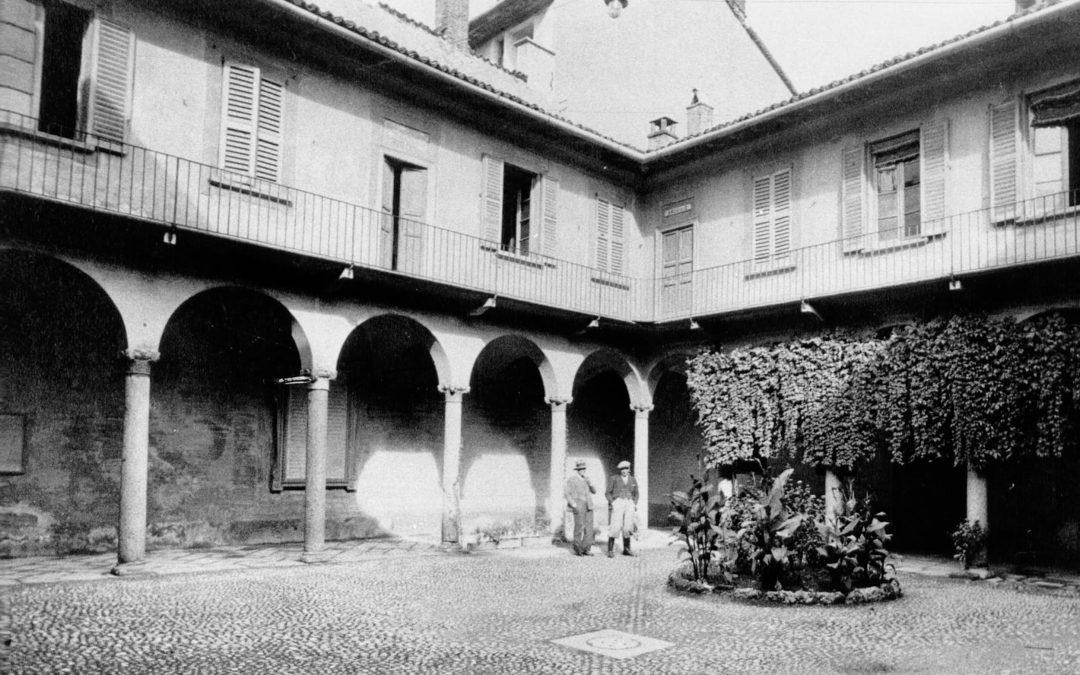
The Casa degli Umiliati – now home to the Musei Civici – is a convenium. It is first recorded in the early 13th century and the Hospital of San Bernardo was added in the mid-14th century. In 1767, when the order had been disbanded for some years, Monza historian Maurizio Campini notes that the House was referred to as the “Conference or Convocation of the first Humiliati”. Above the entrance door was a fresco (now lost) of the four Delegates of the “Magnifica Comunità Monzese”, seated around a cloth-covered table and focused on distributing alms to the poor, a symbol of the charitable actions that took place at what was then the “Luogo Pio del Convegno” and adjacent hospital, now completely lost. After the abandonment of its religious function, the building served various purposes and has undergone different alterations. Nonetheless, some of the original 15th-century features can still be noted, as can others from the 18th century, while the whole building is characterised by a series of anomalies, due its complex history and to numerous interventions, Note, for example, the irregular shape of the courtyard and portico, and the asymmetrical entrance.
Share your location
View full screen
Choose another point of interest
Zoom in
Zoom out
La pagina richiesta non è stata trovata. Affina la tua ricerca, o utilizza la barra di navigazione qui sopra per trovare il post.
La web app è ottimizzata per essere navigato da dispositivi smartphone e tablet.


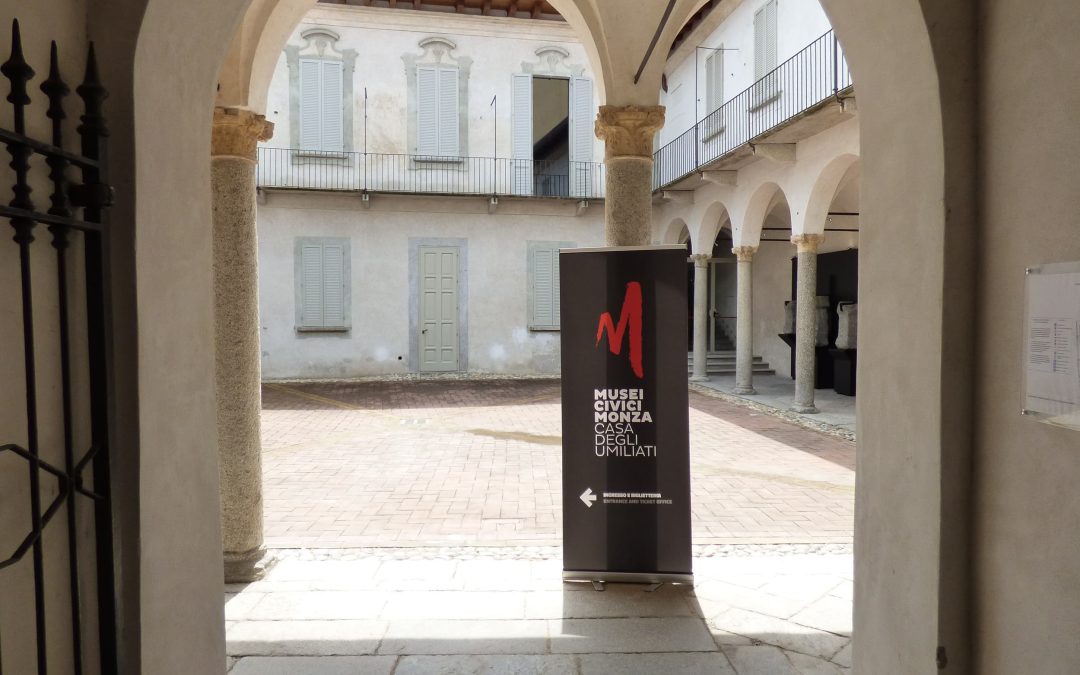
Welcome to the Musei Civici di Monza. Our journey through the museum that contains the art works belonging to the city of Monza starts here. It has been built up over more than a century, thanks to the generosity of collectors and enthusiasts who have added to Monza’s art heritage over time. We have a collection of hundreds of works and thousands of antique prints, carefully conserved in our repositories. Here, you can admire a selection of these works, which represent the richness and variety of the collection.
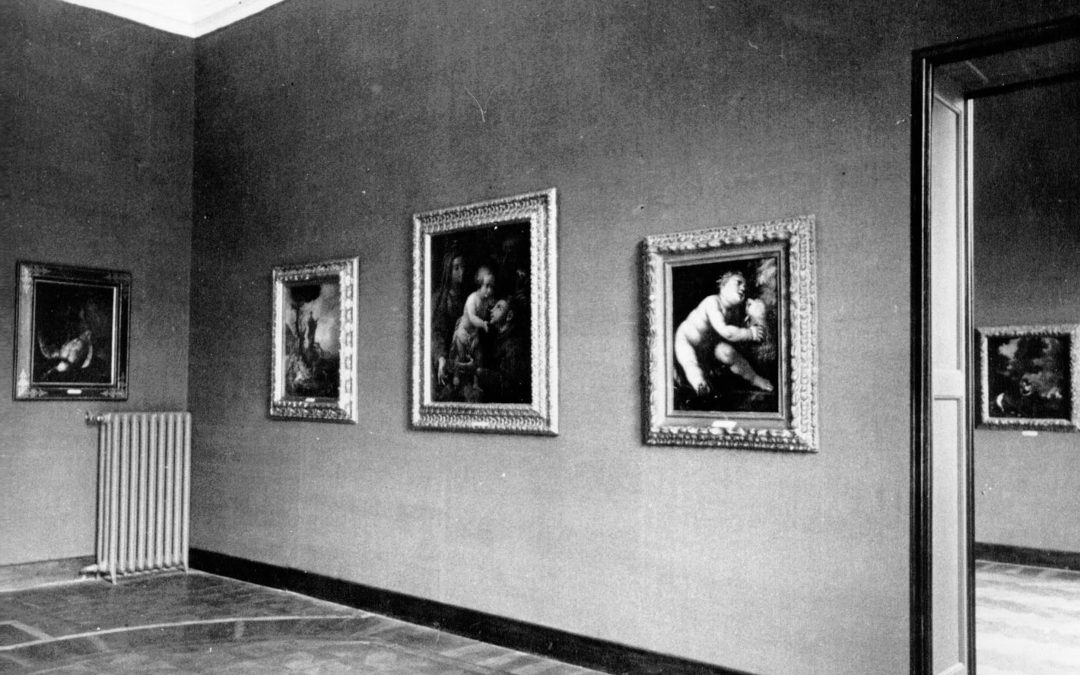
The museum has a long history. It was officially founded in 1935 to display to the public a series of works that had been donated to the municipality beginning in 1874. The initial donation is a piece dating back to Roman times, which you can see in the first room of the museum. Many more donations and bequests have followed since then, including the core of the collection, bequeathed by Eva Galbesi Segrè in 1923, which we will talk about once we visit the first floor.
Given the increasing number of available works that deserve to be seen by the public, the Municipality of Monza decided to set up a museum, which was initially located in Royal Villa of Monza. During the 1960s, the museum was split across two sites: the Gallery of Paintings remained in the royal palace, while the archaeological collections and mediaeval relics were put on display in a room in the Arengario, the old municipal palazzo in the heart of Monza.
After both sites were closed in the 1980s, the museum was reopened, in 2014. It was placed in this building, known as the Casa degli Umiliati, which had undergone lengthy restoration work to adapt it to the very latest standards for preserving this heritage and displaying it safely.
The Humiliati [Italian Umiliati] were a mediaeval religious order – no longer in existence – dating back to the 12th century. They practised humility and poverty, and they lived from manual work, also dedicating themselves to acts of charity. This building, once known as a convenium and now as the Casa degli Umiliati, was a place for meeting and prayer set out, like a convent, around a cloister. From the late 16th century, it began to be used as a place for charity for the poor, then public offices and schools, until it was renovated to house the Musei Civici di Monza. The mediaeval structure has undergone many alterations, although we can still enjoy the square cloister with the surviving portico on two sides, and the elements in the museum itself, including windows and ceiling decorations, mainly from the 18th and 19th centuries.
In 2023, thanks to NRRP funds from the EU, the museum was able to acquire different instruments to guarantee autonomous access to all visitors, including people with physical, sensory, and developmental disabilities. The route is marked with signs and aids for a totally inclusive visit.
Now you are coming to the cloister. Our visit starts here.
Share your location
View full screen
Choose another point of interest
Zoom in
Zoom out
La web app è ottimizzata per essere navigato da dispositivi smartphone e tablet.
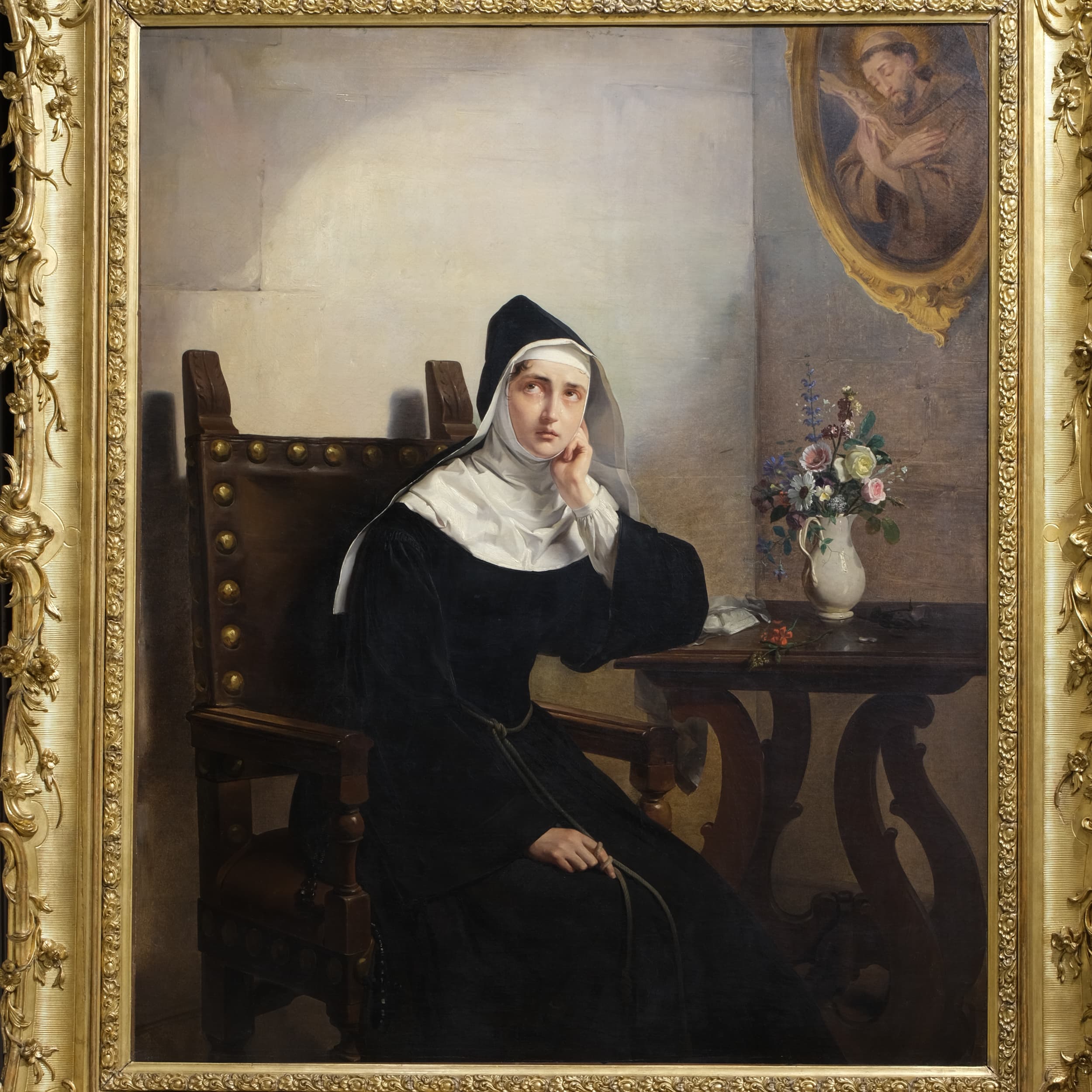
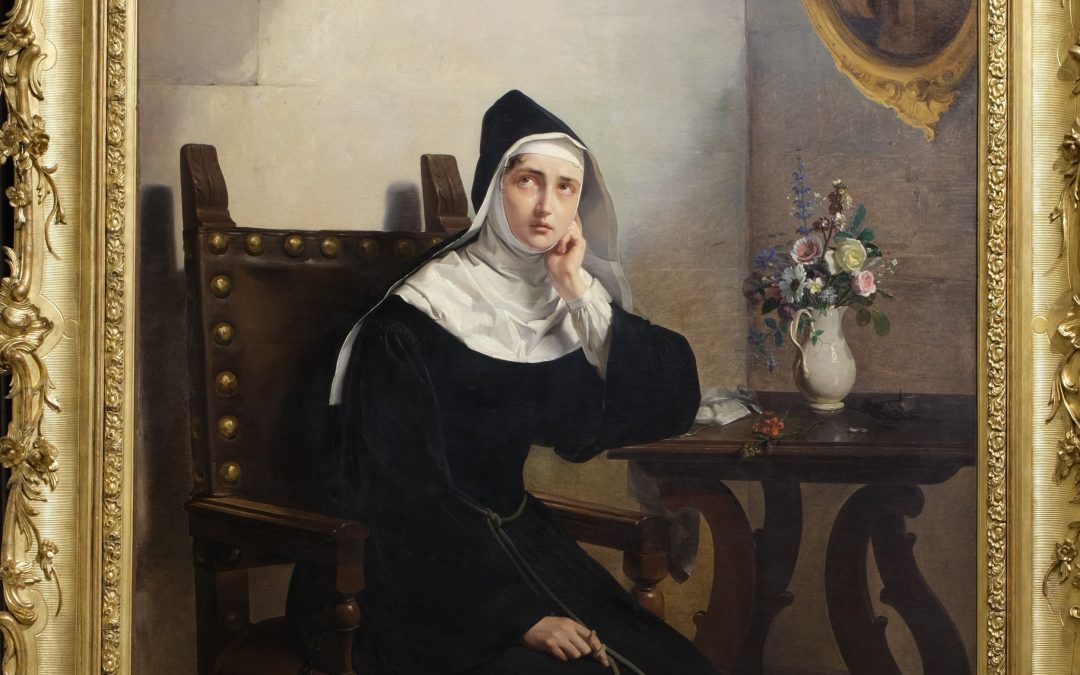
Il dipinto di Giuseppe Molteni esposto in questa sala ci porta a incontrare la figura che tutti conoscono come la Monaca di Monza, resa immortale da Alessandro Manzoni nei “Promessi Sposi”. In realtà, la vicenda narrata nel romanzo si basa su una storia vera, che si svolse tra Milano e Monza a cavallo tra Cinque e Seicento e che Manzoni conobbe grazie alle Historiae Patriae, redatte dallo storico Giuseppe Ripamonti, cronista della terribile pestilenza del 1630, che narra la vicenda quando la donna era ancora in vita e in rapporti epistolari con il cardinale Federico Borromeo.
Nella realtà la monaca fu una nobile di nome Marianna, nata nel 1575 a Milano, in Palazzo Marino. Sua madre era infatti donna Virginia Marino; il padre, don Martino de Leyva, apparteneva a una delle casate più influenti e rispettate della nobiltà spagnola, titolare del feudo di Monza. Per evitare la dispersione dell’eredità, il padre la costrinse alla monacazione forzata e nel 1589, a soli 14 anni, Marianna fu mandata a Monza, presso il monastero di Santa Margherita, dove prese il nome di suor Virginia Maria.
Qui divenne la Signora, esercitando di fatto il potere feudale sul borgo di Monza; tra le mura del convento ebbe inizio la storia d’amore tra suor Virginia e Gian Paolo Osio, il cui palazzo confinava con le mura del monastero. I giovani, con la complicità di altre suore e di alcuni abitanti del borgo, poterono vivere per anni il loro amore clandestino che portò alla nascita di due figli (il primo deceduto, la seconda riconosciuta dal padre).
Ma la vicenda non poté rimanere nascosta a lungo: nel 1607 le minacce da parte di una conversa di rivelare la verità innescarono una serie di omicidi e violenze che arrivarono al Governatore di Milano e al cardinale Federico Borromeo. L’Osio fuggì, ma il suo destino era segnato e venne tradito e ucciso, non prima di aver aiutato a scappare le monache complici tentando poi di assassinarle; suor Virginia venne rinchiusa in un monastero milanese dove fu sottoposta a processo. Tra interrogatori e torture arrivò la condanna per tutti i protagonisti: gli atti del processo – a lungo secretati – ci svelano in tutta la sua drammaticità la vicenda, sino alla sentenza. La Signora, abbandonata dalla famiglia, fu condannata a essere reclusa in una minuscola cella, con una sola, piccola apertura per ricevere cibo, aria e un poco di luce. Furono anni di espiazione durissima, che alla fine portarono il cardinale Federico a concederle il perdono e la possibilità di uscire dalla sua prigione. Suor Virginia morì in veneranda età, per quell’epoca: sopravvisse alla disumana prigionia e alla terribile peste del 1630, per spegnersi nel 1650 nel convento milanese in cui scelse di finire i suoi giorni.
Condividi la tua posizione
Visualizza a schermo pieno
Scegli un altro punto di interesse
Ingrandisci
Rimpicciolisci
La pagina richiesta non è stata trovata. Affina la tua ricerca, o utilizza la barra di navigazione qui sopra per trovare il post.
La web app è ottimizzata per essere navigato da dispositivi smartphone e tablet.


Il nostro percorso in museo si conclude con una serie di opere che raffigurano Monza o che sono intimamente legate alla storia della città, in un ideale omaggio al territorio. Campeggia sulla parete un capolavoro assoluto, la “Veduta della Contrada Nuova” che il pittore bresciano Angelo Inganni dipinse nel 1850. Nel momento più fervido della produzione ottocentesca di vedute urbane minuziose e ricche di dettagli di vita quotidiana, il dipinto offre una veduta da sotto i portici dell’Arengario verso la prospettiva della Contrada Nuova (oggi via Vittorio Emanuele) sino al Ponte dei Leoni. Accanto al quadro dell’Inganni, vediamo un altro edificio storico nel cuore di Monza, il Duomo dedicato a San Giovanni Battista: la veduta dell’abside mostra un taglio insolito del monumento, dal lato che affaccia sul Lambro, animato da piccole figure. I due quadri esposti di seguito ci consegnano invece preziose testimonianze storiche di due monumenti scomparsi: l’acquarello di Giosuè Bianchi, padre di Mosè, raffigura il “Dazio di Porta San Biagio”, una delle porte aperte nella cinta di mura medievali volute dai Visconti nei primi decenni del Trecento. Le mura circondavano il borgo con un anello circolare che si saldava all’altezza del Castello, raffigurato nel dipinto sovrastante. Del Castello rimangono ormai poche tracce nei pressi del fiume Lambro: già diroccato in passato, come mostra la torre sventrata, fu demolito insieme alle mura nel corso del XIX secolo, quando lo sviluppo industriale e urbano di Monza vedeva nella cinta un ostacolo all’espansione e ai commerci.
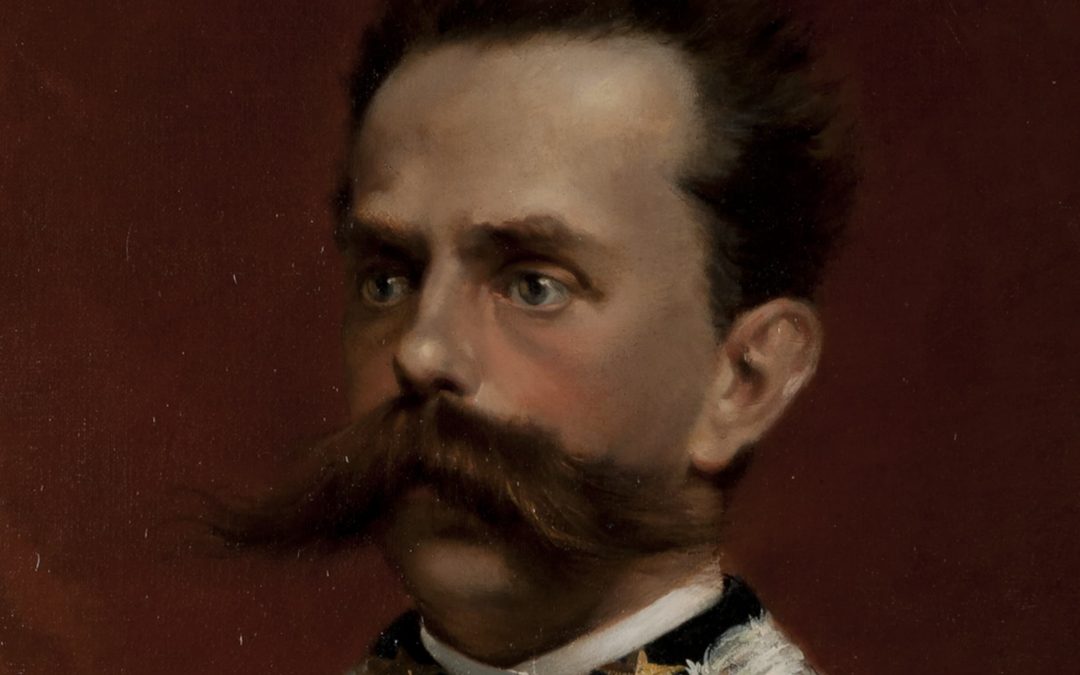
L’interno del Duomo è evocato – più che puntualmente rappresentato – nel dipinto di Mosè Bianchi che sottende un tema caro alla pittura dell’epoca, all’indomani dell’Unità d’Italia: spiccano infatti nella penombra della navata i colori delle vesti, verde, bianco e rosso che alludono al Tricolore. Umberto I, effigiato qui da Gerardo Bianchi che a Monza svolgeva anche le funzioni di fotografo di corte e che infatti rende il soggetto con un taglio moderno e fotografico, apre lo sguardo sulla presenza sabauda in città, cui si ricollega il bozzetto della decorazione della Saletta Reale, di cui hai visto in precedenza il cartone preparatorio.
Concludono il nostro percorso due pregevoli opere seicentesche. Lo Stendardo processionale, ricco di ricami e vetri colorati a imitazione di pietre preziose, ci riporta agli anni bui della peste del 1630, quella narrata dal Manzoni: Monza patì la pestilenza e gli abitanti invocarono l’intercessione divina, offrendo la realizzazione dello stendardo da portare in processione. Accanto alla Vergine col Bambino appaiono i due santi patroni di Monza: a sinistra è riconoscibile Giovanni il Battista, patrono storico sin dall’epoca longobarda; a destra è raffigurato Gerardo dei Tintori, il santo monzese fondatore nel XII secolo dell’ospedale per i poveri e i bisognosi. Pur avendo ormai una sede moderna, ancora oggi l’ospedale monzese è intitolato al santo fondatore, la cui vita e miracoli sono raccontati – completi di didascalie – nel dipinto devozionale in cui campeggia la figura del santo con i suoi attributi canonici, il bastone con il ramo di ciliegie che allude a uno dei suoi miracoli.
La visita al museo si conclude qui: puoi ripercorrere le sale o raggiungere direttamente l’uscita tornando al piano terra. Ci auguriamo che la visita sia stata di tuo gradimento: puoi lasciare le tue impressioni e i tuoi suggerimenti, se lo desideri, compilando un breve questionario disponibile alla reception.
Arrivederci!
Condividi la tua posizione
Visualizza a schermo pieno
Scegli un altro punto di interesse
Ingrandisci
Rimpicciolisci
La pagina richiesta non è stata trovata. Affina la tua ricerca, o utilizza la barra di navigazione qui sopra per trovare il post.